Celotex vs Kingspan vs Recticel: PIR Insulation Comparison for Trade Professionals
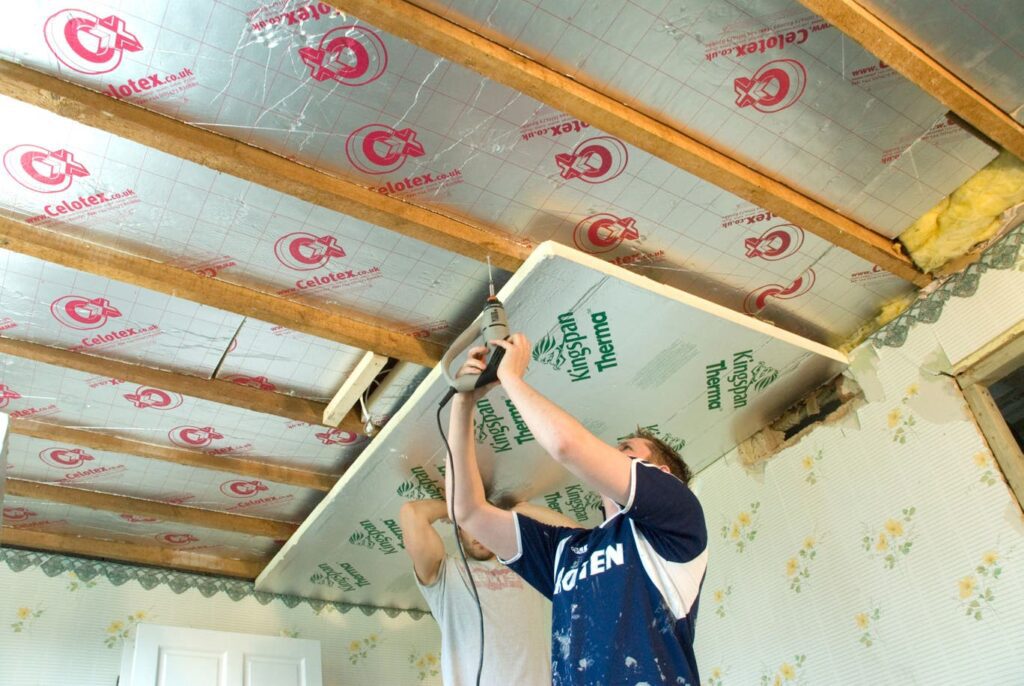
Celotex, Kingspan, Recticel, and Ecotherm all manufacture PIR insulation boards with virtually identical core performance – thermal conductivity of 0.022 W/mK, compressive strength of 120-150 kPa for floor-grade products, and compliance with BS EN 13165. The practical differences between brands come down to product range breadth, regional availability, merchant stocking patterns, and pricing rather than fundamental technical performance, meaning brand selection typically depends on what your regular supplier stocks and which manufacturer offers better trade pricing for your required quantities.
Comparing Leading PIR Insulation Brands
The UK PIR insulation market includes several major manufacturers producing technically similar products. Understanding what actually differs between brands helps specification without overthinking choices that make minimal practical difference.
What’s the Same Across All Major Brands
All reputable PIR manufacturers produce boards meeting BS EN 13165 (the European standard for PIR/PUR insulation products). This standard sets requirements for:
- Thermal conductivity (lambda value)
- Compressive strength
- Dimensional stability
- Reaction to fire
- Water absorption characteristics
- Durability
Products meeting BS EN 13165 deliver consistent, predictable performance regardless of brand. A 100mm board with 0.022 W/mK lambda from Celotex performs identically to a 100mm board with 0.022 W/mK lambda from Kingspan, Recticel, or any other manufacturer meeting the standard.
The PIR foam chemistry is essentially the same across brands. Manufacturers use similar raw materials and manufacturing processes producing closed-cell polyisocyanurate foam with similar density, cell structure, and thermal properties.
What Actually Differs Between Brands
Since core performance is standardised, brand differences come from:
Product range breadth: Some manufacturers offer specialist products for niche applications (ultra-high compressive strength, specific facings, tapered systems, etc.)
Technical support quality: Larger manufacturers typically provide more comprehensive technical services – U-value calculations, CPD training, specification advice, BIM models
Regional availability: Some brands have stronger distribution in certain UK regions. What’s readily available in London might be harder to source in rural Scotland
Pricing: Trade pricing varies by brand, region, and merchant relationships. One brand might be consistently cheaper in your area while being more expensive elsewhere
Product naming conventions: Different manufacturers use different naming systems which can be confusing but doesn’t affect actual performance
Marketing and familiarity: Some brands invest more in marketing creating greater name recognition among builders, though this doesn’t affect product performance
Celotex: Product Range and Specifications
Celotex, manufactured by Saint-Gobain, is one of the most widely recognised PIR brands in UK construction. The name “Celotex” has become somewhat generic – many trade professionals refer to any PIR board as “Celotex” regardless of actual brand.
Manufacturing and History
Celotex is manufactured at Saint-Gobain’s facility in South Wales. The brand has operated in the UK market for decades, building strong recognition and extensive distribution coverage.
Saint-Gobain is a major international building materials manufacturer, giving Celotex backing from a large parent company with significant resources for quality control, technical support, and product development.
Core Product Ranges
GA4000 Series: General application boards suitable for walls, roofs, and floors. This represents Celotex’s main product line with the widest thickness availability (25mm-200mm) and highest availability through merchants.
Technical specs:
- Lambda: 0.022 W/mK
- Compressive strength: 120 kPa minimum
- Facings: Aluminium foil both sides
- Fire rating: Class E
- Available thicknesses: 25mm-200mm
The GA4000 range handles approximately 80% of typical residential applications. For standard projects without specialist requirements, GA4000 is the default choice.
TB4000 Series: Thin board applications where space constraints limit insulation thickness. Available 20mm-75mm. Lower compressive strength (100 kPa) means they’re not suitable for floor applications beneath screed.
CW4000 Series: Cavity wall specific products. Functionally similar to GA4000 but marketed specifically for partial-fill cavity wall applications.
XR4000 Series: Pitched roof specific products featuring shiplap edges for tighter joints between boards. Available 50mm-150mm.
FL4000 Series: Enhanced compressive strength (150 kPa) for commercial floor applications or situations requiring higher loading capacity.
Crown-Fix Range: Glass tissue facings instead of aluminium foil for use with torch-applied roofing felt systems.
Availability and Distribution
Celotex enjoys very high availability across the UK. Most builders merchants stock Celotex products, particularly the GA4000 range in common thicknesses (50mm, 75mm, 100mm, 120mm, 150mm).
Regional availability is consistent – you can source Celotex as easily in Scotland as in the South East. This reliable availability makes Celotex a safe specification choice when you need to be confident materials will be readily available.
Technical Support
Saint-Gobain provides comprehensive technical support including:
- U-value calculation tools
- Technical datasheets and Declarations of Performance
- BIM models for design integration
- CPD (Continuing Professional Development) presentations
- System warranties for complete build-ups
Kingspan: Product Range and Specifications
Kingspan is probably the largest PIR insulation manufacturer globally and has the most extensive product range of any UK manufacturer.
Manufacturing and History
Kingspan operates multiple manufacturing facilities serving the UK market, including sites in the UK and Ireland. The company is publicly listed and focuses extensively on insulation and building envelope products.
The Kingspan name encompasses multiple sub-brands and product lines, making their product range more complex to navigate than some competitors but offering more specialist options.
Core Product Ranges
Therma Range: Standard PIR products for general applications. This range includes multiple sub-products:
- Therma TR27: General application, foil-faced, for roofs and walls
- Therma TR26: Glass tissue faced for torch-applied waterproofing
- Therma TF70: Floor applications, 120 kPa compressive strength
- Therma TW55: Enhanced strength floors, 180 kPa compressive strength
Technical specs (Therma range):
- Lambda: 0.022-0.023 W/mK depending on product
- Compressive strength: 100-180 kPa depending on grade
- Facings: Aluminium foil or glass tissue depending on product
- Fire rating: Class E typically
- Available thicknesses: 50mm-200mm depending on product
Kooltherm Range: Premium range using modified chemistry achieving better lambda values (0.018-0.020 W/mK). These boards need less thickness for equivalent thermal performance but cost more.
Kooltherm suits applications where space is severely constrained and paying premium for thinner insulation is worthwhile. For standard applications, Therma range provides better value.
Specialist Products:
- TP10: Pitched roof specific products
- TW50: Partial fill cavity walls
- GreenGuard range: External wall insulation specific products
- Optim-R: Vacuum insulation panels (VIP) achieving 0.007 W/mK but very expensive
Availability and Distribution
Kingspan products are widely available through major merchants, though specific product lines vary by supplier. The Therma range stocks most readily. Specialist products like Kooltherm or Optim-R often require ordering rather than being held as stock.
Kingspan’s product naming can be confusing with numerous TR and TW product codes. Cross-reference specifications carefully to ensure you’re ordering the correct product for your application.
Technical Support
Kingspan provides extensive technical support:
- Comprehensive online tools for U-value calculation, specification, and BIM
- Detailed product literature and installation guides
- System warranties for complete assemblies
- CPD training and webinars
- Large technical support team
The breadth of Kingspan’s technical resources exceeds most competitors. For complex projects requiring detailed technical backup, Kingspan’s support infrastructure is a genuine advantage.
Recticel: Product Range and Specifications
Recticel manufactures PIR insulation under the Eurethane and Powerroof brands. The company has lower brand recognition than Celotex or Kingspan but produces quality products at competitive pricing.
Manufacturing and History
Recticel is a Belgian-based manufacturer with production facilities serving the UK market. The company produces insulation alongside other polymer-based products.
In the UK market, Recticel products often come to market through distribution partnerships rather than direct sales, making brand visibility lower despite solid technical performance.
Core Product Ranges
Eurethane Range: General application PIR boards:
- Eurethane GP: General purpose boards for walls, roofs, floors
- Eurethane AL: Aluminium-faced version
Technical specs:
- Lambda: 0.022 W/mK
- Compressive strength: 120-150 kPa depending on grade
- Facings: Aluminium foil
- Fire rating: Class E
- Available thicknesses: 50mm-150mm typical
Powerroof Range: Flat roof specific products with facings suitable for various waterproofing systems.
Product Performance
Recticel products match Celotex and Kingspan specifications exactly. A 100mm Eurethane board performs identically to 100mm Celotex GA4000 or Kingspan TR27 – same lambda value, same compressive strength, same compliance with BS EN 13165.
The main difference is market presence rather than technical capability.
Availability and Distribution
Recticel has medium availability compared to Celotex or Kingspan. Not all merchants stock Recticel products, and those that do might hold limited thickness ranges.
Some regions have better Recticel availability than others. Check with your regular suppliers about Recticel stock before specifying if consistent availability matters for your projects.
Pricing
Recticel often prices competitively compared to Celotex and Kingspan, sometimes 5-10% lower for equivalent products. This makes Recticel attractive when price matters and availability is adequate.
For projects where saving a few percent on insulation cost matters, ask for Recticel quotes alongside the major brands.
Ecotherm: Product Range and Specifications
Ecotherm positions itself as a more environmentally-focused PIR manufacturer while maintaining standard technical performance.
Manufacturing and History
Ecotherm manufactures in the UK with stated focus on reducing environmental impact of production processes. The company is smaller than Celotex or Kingspan but growing market presence.
Core Product Ranges
Eco-Versal: General application boards for walls, roofs, and floors
Technical specs:
- Lambda: 0.022 W/mK
- Compressive strength: 120-150 kPa depending on grade
- Facings: Aluminium foil
- Fire rating: Class E
- Available thicknesses: 50mm-180mm
Eco-Cavity: Cavity wall specific products
Eco-Deck: Flat roof applications
Product Performance
Ecotherm products meet BS EN 13165 with the same lambda values and compressive strengths as other major brands. Technical performance is equivalent – an Ecotherm board performs identically to equivalent Celotex or Kingspan boards.
Availability and Distribution
Ecotherm has medium availability, growing but not yet matching Celotex or Kingspan distribution coverage. Availability varies significantly by region – some areas have good Ecotherm access while others find it difficult to source.
For projects where environmental credentials matter and Ecotherm is available locally, it provides equivalent technical performance to established brands.
Technical Specification Comparison
Side-by-side comparison of core specifications for equivalent products (100mm general application boards suitable for floors, walls, and roofs):
| Specification | Celotex GA4000 | Kingspan TR27 | Recticel Eurethane | Ecotherm Eco-Versal |
| Lambda (W/mK) | 0.022 | 0.022 | 0.022 | 0.022 |
| Compressive strength | 120 kPa | 120 kPa | 120 kPa | 120 kPa |
| Density | 30-35 kg/m³ | 30-35 kg/m³ | 30-35 kg/m³ | 30-35 kg/m³ |
| Fire rating | Class E | Class E | Class E | Class E |
| Facings | Aluminium foil | Aluminium foil | Aluminium foil | Aluminium foil |
| Board size | 2400x1200mm | 2400x1200mm | 2400x1200mm | 2400x1200mm |
| Weight (100mm) | 9-10kg | 9-10kg | 9-10kg | 9-10kg |
| BS EN 13165 | Yes | Yes | Yes | Yes |
| CE marked | Yes | Yes | Yes | Yes |
This table demonstrates the fundamental point: technical specifications are virtually identical across brands. Performance differences between brands are negligible for equivalent products.
Where Specifications Actually Differ
The comparison above shows standard products. Differences emerge in specialist product ranges:
Kingspan Kooltherm: Lambda 0.018-0.020 W/mK (better than standard PIR). No equivalent from other manufacturers in mainstream products. Premium pricing.
Enhanced strength products: Kingspan TW55 (180 kPa), Celotex FL4000 (150 kPa) offer higher compressive strength than standard. Useful for heavy commercial applications but unnecessary for residential.
Facing options: All manufacturers produce glass tissue faced boards for torch-applied felt (Celotex Crown-Fix, Kingspan TR26, equivalents from others).
Thickness ranges: Kingspan offers the widest thickness range including very thin (25mm) and very thick (200mm+) options. Other brands have narrower ranges.
Tapered systems: All major manufacturers can produce tapered insulation for creating falls in flat roofs, but Kingspan’s tapered system design tools and support are most developed.
Price and Availability Considerations
For trade professionals, price and availability often matter more than technical specification differences when choosing between brands.
Pricing Patterns
PIR insulation pricing varies by:
- Brand (some consistently price higher or lower)
- Quantity (bulk purchases reduce per-board cost)
- Merchant (different merchants price differently for same products)
- Season (prices often increase spring/summer during busy building season)
- Region (transport costs affect regional pricing)
Typical price hierarchy (approximate, varies by region):
Most expensive: Kingspan Kooltherm (premium performance) Upper mid-range: Kingspan Therma, Celotex GA4000 Lower mid-range: Recticel, Ecotherm Least expensive: Lesser-known brands, promotional offers
The difference between brands is typically 5-15% for equivalent products. A project using 100 boards might save £50-150 choosing Recticel over Kingspan, for example.
For large projects, these differences add up. For small projects (under 20 boards), the difference might be £20-30 which is unlikely to be worth specifying a harder-to-source brand.
Availability Realities
Product availability matters more than many specifiers realize. If your specified brand isn’t readily available, projects face:
- Delivery delays while waiting for special orders
- Higher costs from emergency orders or small quantity purchases
- Installation delays affecting other trades
- Potential substitution with unspecified products causing compliance queries
Check before specifying: Call your regular merchant and verify they stock your specified brand and thickness. Don’t spec Recticel if your merchant doesn’t stock it and you need materials in 48 hours.
Trade Account Benefits
Most trade professionals develop relationships with specific merchants and brands over time. Trade account benefits include:
- Preferential pricing on regular purchases
- Priority access to stock during shortages
- Extended payment terms
- Technical support from merchant technical advisors
- First notification of price increases allowing advance purchasing
These benefits often outweigh small price differences between brands. Sticking with brands your regular merchant stocks maintains good trading relationships and ensures reliable material supply.
Which PIR Brand for Your Project
Choosing between brands involves balancing performance requirements (which are virtually identical), availability, pricing, and practical considerations.
When Brand Doesn’t Matter
For the majority of residential projects, brand selection makes minimal practical difference if you specify:
- Correct thickness for target U-value
- Appropriate compressive strength (120 kPa minimum for floors)
- Suitable facings for waterproofing system (foil vs glass tissue)
- Product meeting BS EN 13165
Any major brand (Celotex, Kingspan, Recticel, Ecotherm) meeting these criteria performs identically.
Practical selection approach:
- Ask your regular merchant what they stock in required thickness
- Get prices for 2-3 brands
- Choose the best combination of availability and price
- Specify that brand
This pragmatic approach saves time overthinking choices that make no real difference to project outcomes.
When Brand Might Matter
A few situations where brand selection has genuine implications:
System warranties: Some waterproofing manufacturers specify approved insulation brands for warranty compliance. If you’re using a specific roofing system requiring Kingspan TR26, you can’t substitute Celotex Crown-Fix without checking warranty terms.
Technical support requirements: Complex projects benefiting from detailed technical support might prefer Kingspan due to their extensive technical resources. For straightforward residential projects, all brands provide adequate support.
Project specifications: Some architects or main contractors specify particular brands in tender documents. You’re obliged to supply specified brands or seek approval for substitutions.
Consistency across sites: Developers building multiple similar properties might standardize on one brand ensuring consistent pricing and simplified procurement. This administrative benefit outweighs small performance or price differences.
Environmental requirements: Projects pursuing environmental certifications (BREEAM, etc.) might prefer brands with Environmental Product Declarations or specific environmental credentials. Ecotherm positions itself here, though all major manufacturers now produce EPDs.
Stocking Multiple Brands: Trade Advantages
Trade professionals working regularly with PIR insulation often benefit from flexibility around brand selection rather than rigid specification.
Why Flexibility Matters
Supply chain resilience: During supply shortages (which occur periodically), having relationships with multiple brands ensures material availability when one brand stocks out.
Pricing leverage: Ability to switch brands gives negotiating power with merchants. “Your Celotex price is £2/board higher than competitor’s Kingspan price” prompts price matching or gives you alternatives.
Product range access: Different brands’ specialist products solve different problems. Kingspan’s Kooltherm suits ultra-thin applications. Celotex has wider thickness availability in GA4000 range. Having access to multiple ranges increases problem-solving options.
Regional variations: Working across different UK regions might mean one brand stocks better in some areas than others. Flexibility lets you work with local availability patterns.
How to Maintain Flexibility
Specify performance, not brand: Where possible, specify “100mm PIR insulation, lambda 0.022 W/mK max, 120 kPa compressive strength minimum, BS EN 13165 compliant” rather than “Celotex GA4100”. This allows substitution with any conforming product.
Maintain multi-brand knowledge: Understand equivalent products across brands. Know that Celotex GA4000, Kingspan TR27, Recticel Eurethane GP, and Ecotherm Eco-Versal are functionally identical for most applications.
Build merchant relationships broadly: Have accounts with 2-3 merchants who stock different brands. This provides options when pricing or availability becomes an issue.
Stay current with product changes: Manufacturers occasionally update product ranges or naming systems. Following Part L requirements and product availability keeps you informed of changes affecting specifications.
Communication with clients/specifiers: For projects where brand is pre-specified, maintain dialogue about equivalent alternatives if availability or pricing issues arise. Most specifiers accept equivalents when they understand products are functionally identical.
When to Stick With One Brand
Despite flexibility benefits, some situations favor consistent brand use:
Volume discounts: Regular bulk purchases from one brand earn volume discounts that might exceed any price differences between brands.
Technical familiarity: Deep knowledge of one brand’s product range and technical support resources provides efficiency benefits. Less time spent checking specifications or contacting technical support translates to productivity gains.
Simplified inventory: Merchants carrying one brand avoid confusion from multiple product ranges with different naming conventions. For smaller merchants, single-brand stocking simplifies operations.
Marketing benefits: Some trade businesses market themselves as “approved installers” for specific brands, gaining marketing and lead generation benefits from manufacturer relationships.
These benefits need weighing against flexibility advantages based on your business model and project types.
Common Brand Comparison Questions
Q: Is Kingspan better quality than Celotex?
No. Both meet BS EN 13165 with identical lambda values and compressive strengths for equivalent products. Technical performance is the same. Kingspan has a broader product range and arguably better technical support infrastructure, but for standard applications this doesn’t translate to better performance.
Q: Why is Kingspan more expensive than Celotex?
Kingspan isn’t always more expensive – pricing varies by region and merchant. Where Kingspan costs more, factors include brand positioning, higher technical support investment, broader product range development costs, and market demand. The price premium doesn’t reflect better performance for equivalent specifications.
Q: Can I substitute Recticel for specified Celotex?
Technically yes – equivalent products have identical specifications. Contractually you need approval if Celotex is specified in tender documents. Most specifiers accept substitution for equivalent performance, but always confirm before proceeding.
Q: Does brand affect Building Regulations compliance?
No. Building Regulations care about U-values and thermal performance, not brand names. Any PIR board achieving required lambda value and thickness complies, regardless of manufacturer. Building Control accepts any brand meeting specifications.
Q: Which brand has best availability?
Celotex generally has best overall UK availability through most builders merchants. Kingspan is close second. Recticel and Ecotherm have more variable regional availability. Check with your local suppliers for specific product availability in your area.
Q: Do different brands work together?
Yes. You can mix brands within one project without technical problems. For example, using Celotex for floors and Kingspan for roofs works fine. The only consideration is aesthetic – mixed brands on visible installations (above-rafter roof insulation on extensions, for example) shows different facing colors, though this gets covered by finished roofing.
Q: Which brand for best value?
Value depends on your specific circumstances. Recticel often offers best price per board. But if Recticel isn’t readily available locally, delivery charges and delays eliminate any saving. Best value = brand offering adequate performance (any major brand) with good local availability at competitive pricing.
Need PIR insulation but unsure which brand suits your project? Online Insulation stocks all major PIR brands including Celotex, Kingspan, and Recticel across the full thickness range, with expert advice and fast UK delivery for trade professionals.