


Blog

MF Ceiling Grid Layout: Setting Out and Spacing for a Professional Finish
Getting the MF ceiling grid layout right before you start fixing saves time, material and the kind of problems that...

MF Ceiling Acoustic Build-Ups: Achieving Part E Compliance Without Accessing the Floor Above
An MF ceiling acoustic build-up is the standard approach for meeting Part E sound insulation requirements in flat...

MF Ceiling vs Timber Batten Ceiling: Specification Guide for UK Contractors
For most ceiling jobs, the choice between an MF ceiling system and a timber batten ceiling comes down to what the...

MF Ceiling Components: MF5, MF6, MF7 and Hanger Types – Complete Parts Reference
An MF ceiling system is only as good as the components holding it together. If you’re pricing a job, checking a...

C Stud and U Track: Understanding Metal Stud Components and How They Fit Together
Metal stud framing uses two primary components: C-shaped studs and U-shaped track. The stud is the vertical member that...

Metal Stud Wall Acoustic Performance: Achieving Rw 40-55dB with Stud Partition Systems
The acoustic performance of a metal stud partition wall is determined by three main variables: stud width, the type and...

Metal Stud Partition Heights: Maximum Heights by Stud Width and Board Configuration
Maximum metal stud partition height depends on three variables: stud width, steel gauge, and board configuration. A...

Metal Stud Framing for Partition Walls: A Complete Materials Guide for UK Contractors
Metal stud framing is the standard method for building non-loadbearing partition walls in UK commercial and residential...

Metal Stud Sizes UK: 48mm, 70mm, 92mm and 146mm – Which to Specify and When
Metal stud sizes in the UK range from 48mm up to 146mm width, with each size suited to different partition heights,...

Resilient Bars for Party Walls: Upgrading Timber Stud Walls in Terraced Houses and HMOs
Party wall soundproofing with resilient bars is one of the most effective retrofit acoustic upgrades available for...

How to Avoid Acoustic Flanking with Resilient Bars: Common Installation Mistakes
Acoustic flanking is what happens when sound finds a path around your carefully built separating system rather than...

Resilient Bar Ceiling Systems: Achieving Part E Compliance in Flat Conversions
A resilient bar ceiling is one of the most practical ways to achieve Part E acoustic compliance in a flat conversion...

Resilient Bar Centres: Fixing Spacings for Walls and Ceilings Explained
Resilient bar spacing is one of the most important variables in any acoustic separation system – and one of the...

Gypframe RB1 vs Standard Resilient Bar: Specification Differences and When Each Is Required
When architect drawings specify “Gypframe RB1,” many contractors assume any resilient bar will do the job....

Why Does My Celotex Insulation Say Soprema? The Complete 2026 Rebrand Guide
Is Sopratherm the Same as Celotex? Yes, Sopratherm (by Soprema UK) is the new brand name for the Celotex product range...

Celotex Insulation: Complete Product Range, Specifications, and Selection Guide
Celotex insulation is a PIR (polyisocyanurate) foam insulation board manufactured by Saint-Gobain, available across...

Insulation Board Types: A Selection Guide for UK Trade Professionals
Rigid insulation boards include PIR (polyisocyanurate), EPS (expanded polystyrene), XPS (extruded polystyrene), and...
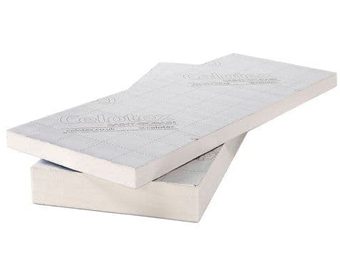
What is PIR Insulation? Technical Specifications & Applications Explained
PIR insulation is a rigid foam insulation board made from polyisocyanurate, a thermoset plastic polymer created through...

PIR Insulation Thickness Guide: U-Values and Specifications from 25mm to 150mm
PIR insulation thickness directly determines thermal performance, with U-values improving as thickness increases due to...

PIR Insulation for Flat Roofs: Warm Roof Construction and Part L Compliance
PIR insulation for flat roofs achieves Part L compliance through warm roof construction, where insulation boards...

Meeting Part L 2021 with PIR Insulation: U-Value Requirements for Trade Professionals
Part L 2021 of the Building Regulations sets maximum U-value targets of 0.16 W/m²K for roofs, 0.26 W/m²K for walls,...

Celotex vs Kingspan vs Recticel: PIR Insulation Comparison for Trade Professionals
Celotex, Kingspan, Recticel, and Ecotherm all manufacture PIR insulation boards with virtually identical core...

PIR Insulation for Floors: Specifications for Solid and Suspended Floor Applications
PIR insulation for floors requires minimum 120 kPa compressive strength to resist loading without compression beneath...

100mm Celotex GA4100: Specifications, U-Values & Application Guide
100mm Celotex GA4100 is a rigid polyisocyanurate (PIR) insulation board with a thermal conductivity of 0.022 W/mK,...

PIR Insulation: The Complete Guide for UK Trade Professionals
PIR insulation (polyisocyanurate) is a rigid foam insulation board with a typical thermal conductivity of 0.022 W/mK,...

What to Look for in a Reliable Insulation Shop: Your Guide to Quality and Value
Choosing where to purchase your insulation materials is a key decision that can significantly influence the outcome of...

Why Choose an Insulation Superstore for Your Building Needs?
Did you know that up to 35% of heat can be lost through the walls of an uninsulated home? In today’s construction...

Save Money and Stay Warm: The Advantage of Insulation in Rolls
In the United Kingdom, where the weather can swing from biting winter chills to surprisingly warm summer spells,...

Selecting Quality Trade Insulations: Key Considerations for Contractors
For building professionals across the United Kingdom, the selection of appropriate insulation materials is a...

Choosing the Right Plasterboard for Bathrooms: A UK Guide to a Dry and Durable Space
Bathrooms, by their very nature, are unique environments within our homes. They are subject to high levels of humidity,...


